Renting vs. Building Custom Staging: What Makes Sense for Your Production
Renting and building custom staging require entirely different approaches to budget, logistics, and production management. If you are organizing a small concert, it will be better to rent.
However, if you are planning to organize a big concert or event, building custom staging allows you to tailor the exact design, scale, and visual impact to the performer's brand and the audience's experience.
The right choice depends on your production needs, budget, timeline, and how often you require a custom staging setup.
In this guide, we’ll compare renting vs. building a custom stage to help you determine which option makes the most sense for your production.
Renting Staging: The Flexible Option
Renting is the fastest way to get a professional stage up without a long lead time or a large upfront investment. You pull from an existing inventory of decking, truss, barricades, and structural components, then hand the gear back once the show wraps.
Renting works best when:
- Budget is tight: You avoid the cost of design, fabrication, and long-term storage.
- Timelines are short: Stock equipment is ready to deploy on a fast schedule.
- The layout is standard: A conventional footprint covers most club shows, festival sets, and corporate events.
- You produce occasionally: One-off or seasonal shows rarely justify owning a full stage.
Building Custom Staging: The Signature Option
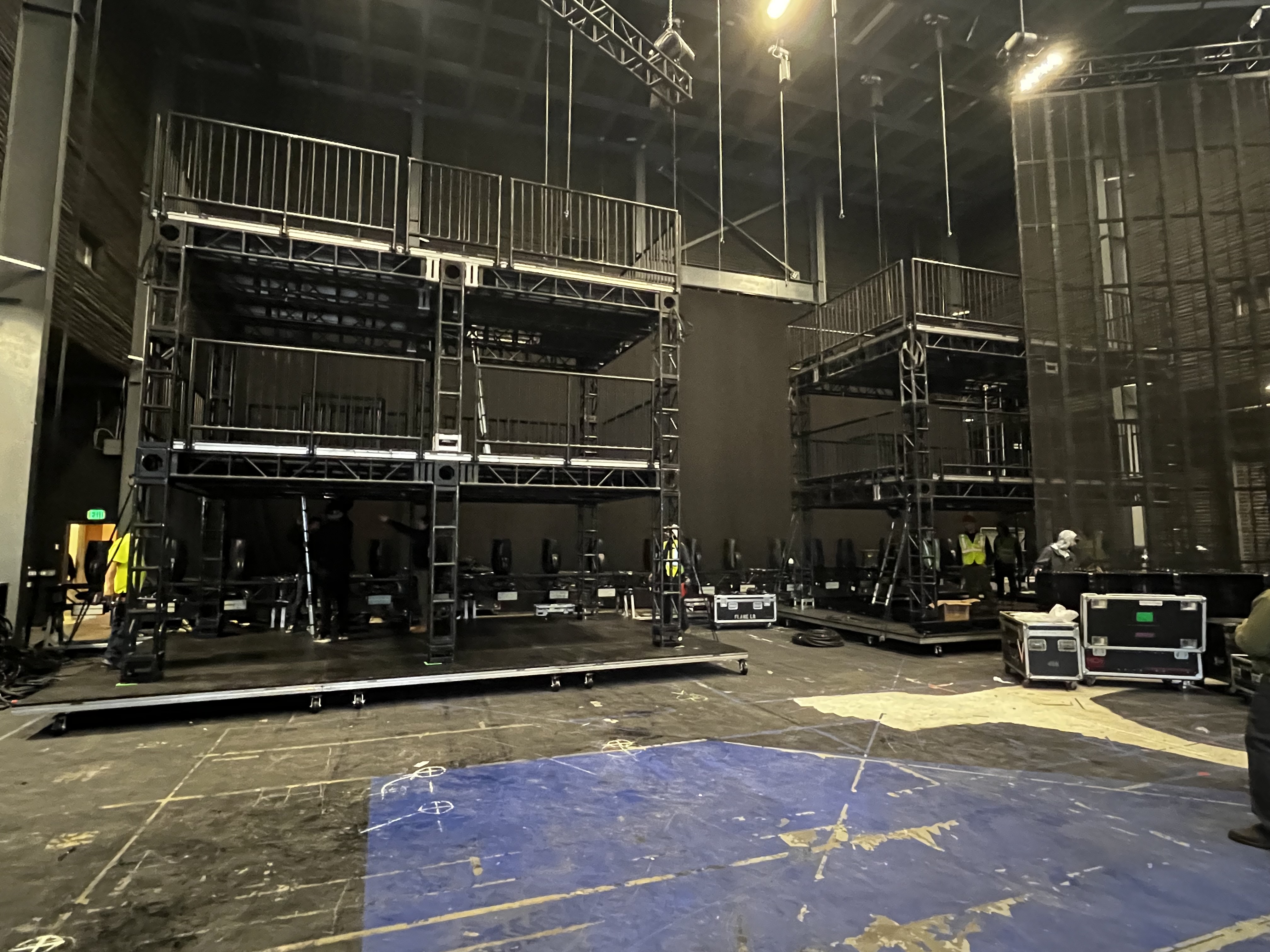
Custom staging is built around a specific creative vision. Instead of adapting your show to stock parts, you design the structure to match the artist, the set, and the venue. This is how tours create moments an audience remembers.
Custom staging is worth it when:
- The design is ambitious: Unusual shapes, thrusts, automation, and scenic builds need purpose-built structures.
- You repeat the setup: A touring production reuses the same build across dozens of dates.
- Brand identity matters: A signature look reinforces the artist or the sponsor at every stop.
- Load capacity is critical: Heavy lighting, video, and audio rigs demand engineered support.
How to Decide Between Renting and Building
Before you commit, weigh a few practical factors that shape both cost and outcome:
- Budget: Renting lowers upfront spend, while building pays off over repeated use.
- Timeline: Custom fabrication needs lead time, so plan early for an ambitious build.
- Frequency: The more often you run the same show, the more a custom stage makes sense.
- Scale and load: Larger rigs and complex designs often require engineered, purpose-built structures.
A hybrid approach is common too. Many productions rent a proven structural base, then add custom scenic elements on top to control both cost and creativity.
Checklist for Organizing a Concert
Staging is only one piece of the production. Use this checklist for organizing a concert to keep every phase of planning on track. Most guides skip the structural details, so pay close attention to the staging line items.
Pre-Production Planning
- Set your budget: Account for venue, talent, staging, labor, and a contingency reserve.
- Lock the venue and date: Confirm capacity, indoor or outdoor setup, and load-in access.
- Secure permits and insurance: Cover structural, fire, and liability requirements early.
- Confirm the lineup: Finalize performers, runtimes, and technical riders.
Staging and Structural Setup
- Choose rent or build: Match the structure to your design, load, and budget.
- Plan truss and rigging: Size the system for lighting, video, and audio loads.
- Specify decking and barricades: Protect performers and crowds with the right layout.
- Verify ballast and stability: Use engineered ballast for outdoor and freestanding builds.
- Schedule load-in and setup: Book crew and set a realistic build timeline.
Show Day and Load-Out
- Run a full tech check: Test sound, lighting, and structural connections before doors.
- Brief every team: Align production, security, and stage crew on the schedule.
- Assign show-day contacts: Keep a clear chain of command for fast decisions.
- Plan the strike: Book pickup, storage, and teardown before the show ends.
Staging Challenges in Los Angeles (and How to Solve Them)
Los Angeles is one of the most demanding markets for live events. The right preparation, and the right local partner, can turn each of these hurdles into a smooth build.
Permitting and Fire Marshal Approval
Permitting often runs through several city departments, and temporary structures need fire marshal approval along with stamped structural engineering drawings. A local staging partner can supply code-ready structures and handle the permit and fire marshal documentation for you, so your paperwork clears before the build begins.
Wind, Seismic, and Structural Requirements
Outdoor builds in California must account for wind and seismic loads, which makes engineered support a legal and safety necessity. Working with a team that manufactures in-house means your truss, decking, and ballast are engineered to meet these standards from the start.
Load-In, Traffic, and Venue Access
Tight downtown load-in windows, heavy traffic, and older venues with narrow access can slow a build to a crawl, and union labor rules at many venues add another layer to the schedule. A partner with an established LA presence knows how to coordinate load-in around the city's traffic and venue constraints, keeping your build safe, compliant, and on schedule.
Build Your Next Event with Accurate Staging
Whether you rent a proven structure or build a fully custom set, the right partner makes the difference. At Accurate Staging, we design, manufacture, and install our own truss, decking, and ballast systems, so your production stays precise from concept to load-out. Request a quote and let us build your next concert together.